The Humanitarian
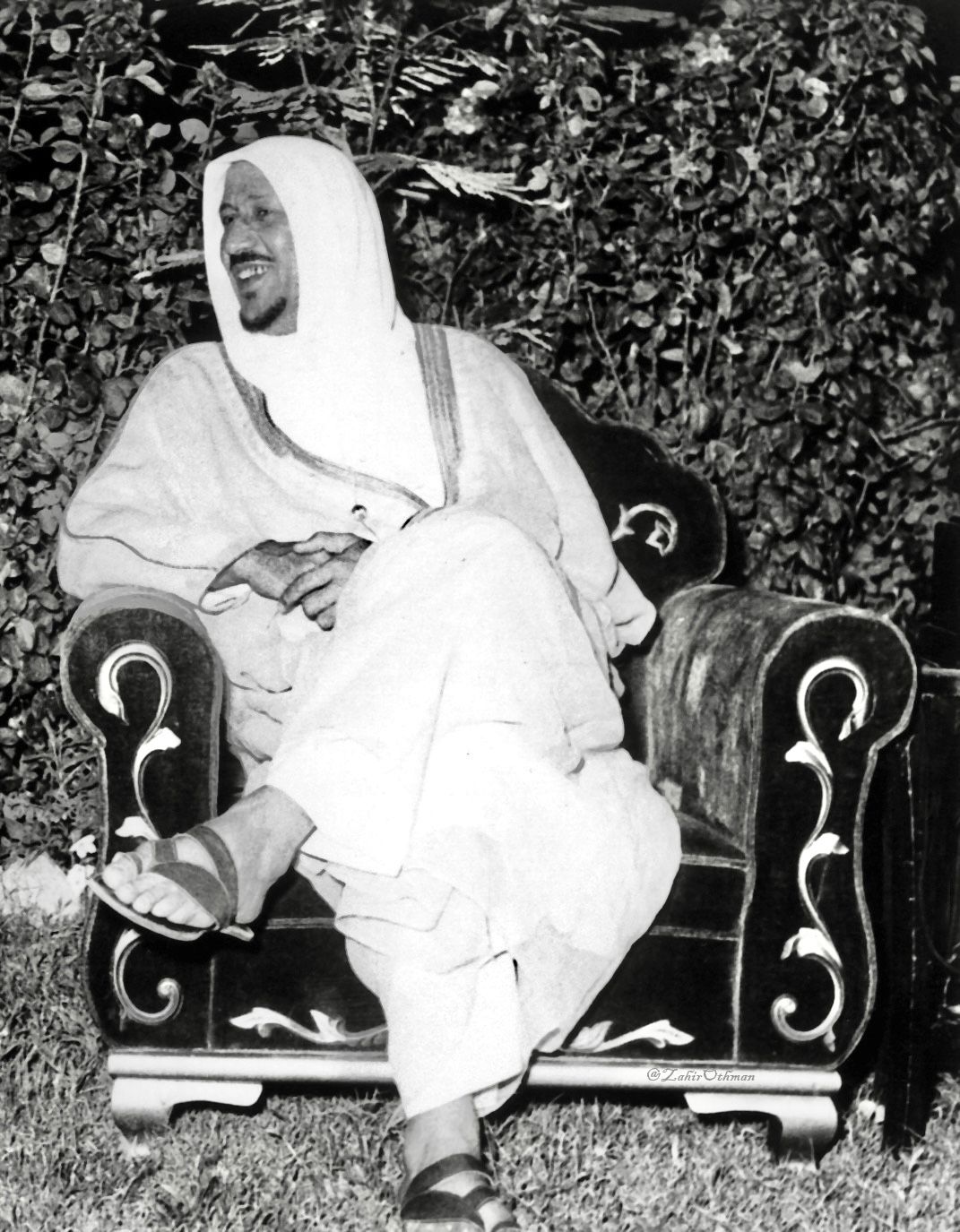
King Saud—may God have mercy upon him—seated in a garden gathering

His Majesty King Abdulaziz, surrounded by His Majesty's sons

King Saud in his palace located in Old Nasiriyah – 1373 AH

King Saud performing traditional Ardha

King Saud shakes hands with several of his sons and daughters

Name and Registration The rose is called “وردة سعود الأول” (transliterated: Warda Saud Al-Awwal / Saud Rose I). It is registered internationally with the American Rose Society. Appearance Described as golden/yellow, luxurious, and elegant. Its formal appearance and golden color connect it to the hybrid tea style. Breeding & Origin Created by E.S. Boerner, a prolific rose breeder who developed many famous roses. The rose took nine years of careful breeding. Produced by Jackson & Perkins, a major American rose company. The text emphasizes that it was named in honor of King Saud bin Abdulaziz Al Faisal Al Saud. Lineage Its genetic ancestry traces back to: Rosa foetida persica, a yellow Persian rose introduced in 1900 by the French botanist Antoine Ducher. From this lineage came the famous Golden Masterpiece (“التحفة الذهبية”), which is explicitly mentioned as a direct ancestor of “Saud Rose I”. Exclusivity Claimed to be unique — the personal rose of King Saud, not owned by anyone else in the world.

Name and Registration The rose is called “وردة سعود الأول” (transliterated: Warda Saud Al-Awwal / Saud Rose I). It is registered internationally with the American Rose Society. Appearance Described as golden/yellow, luxurious, and elegant. Its formal appearance and golden color connect it to the hybrid tea style. Breeding & Origin Created by E.S. Boerner, a prolific rose breeder who developed many famous roses. The rose took nine years of careful breeding. Produced by Jackson & Perkins, a major American rose company. The text emphasizes that it was named in honor of King Saud bin Abdulaziz Al Faisal Al Saud. Lineage Its genetic ancestry traces back to: Rosa foetida persica, a yellow Persian rose introduced in 1900 by the French botanist Antoine Ducher. From this lineage came the famous Golden Masterpiece (“التحفة الذهبية”), which is explicitly mentioned as a direct ancestor of “Saud Rose I”. Exclusivity Claimed to be unique — the personal rose of King Saud, not owned by anyone else in the world.