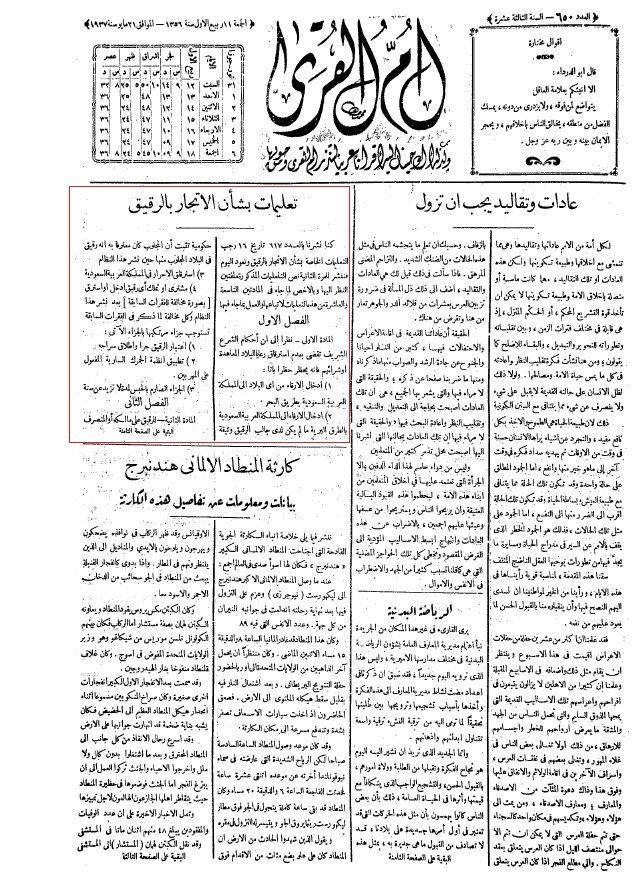
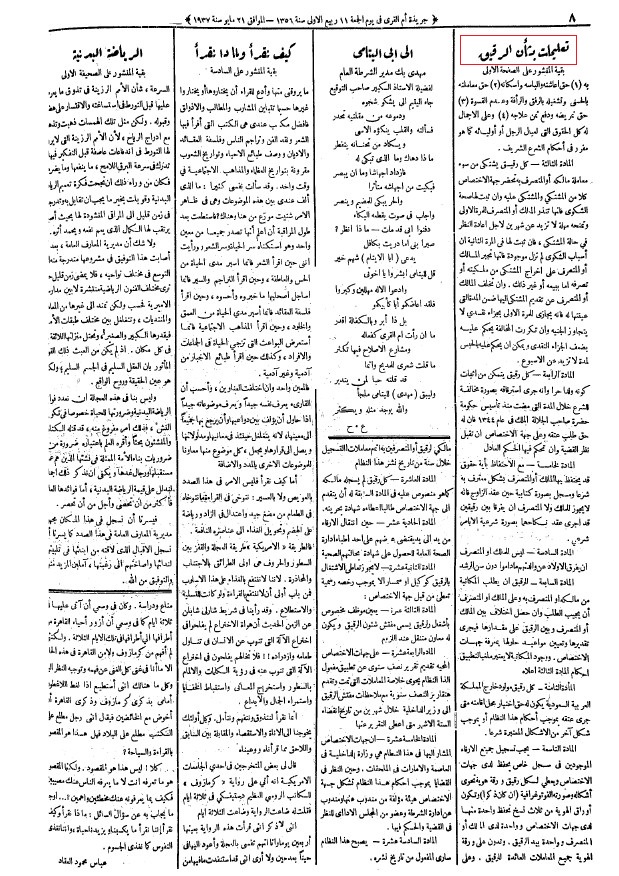
After the passing of King Abdulaziz — may he rest in peace — and the accession of his son King Saud to the throne, and in light of the global social transformations of the period and the Kingdom’s efforts to keep pace with them, King Saud recognized the importance of abolishing the institution of slavery and issuing an explicit legal decree to that effect. Accordingly, in 1380 AH (1960 CE), the King ordered the formation of a committee to study the matter. The committee was chaired by the Minister of the Interior at the time, Prince Abdulmohsin bin Abdulaziz, assisted by Sheikh Muhammad al‑Harkan, Secretary‑General of the Muslim World League, along with other advisers, including Sheikh Nasser al‑Manqoor, Minister of Social Affairs. [4]
in the year 1380 AH, together with the official statement issued by the Minister of Social Affairs, Sheikh Nasser al‑Manqoor [5]

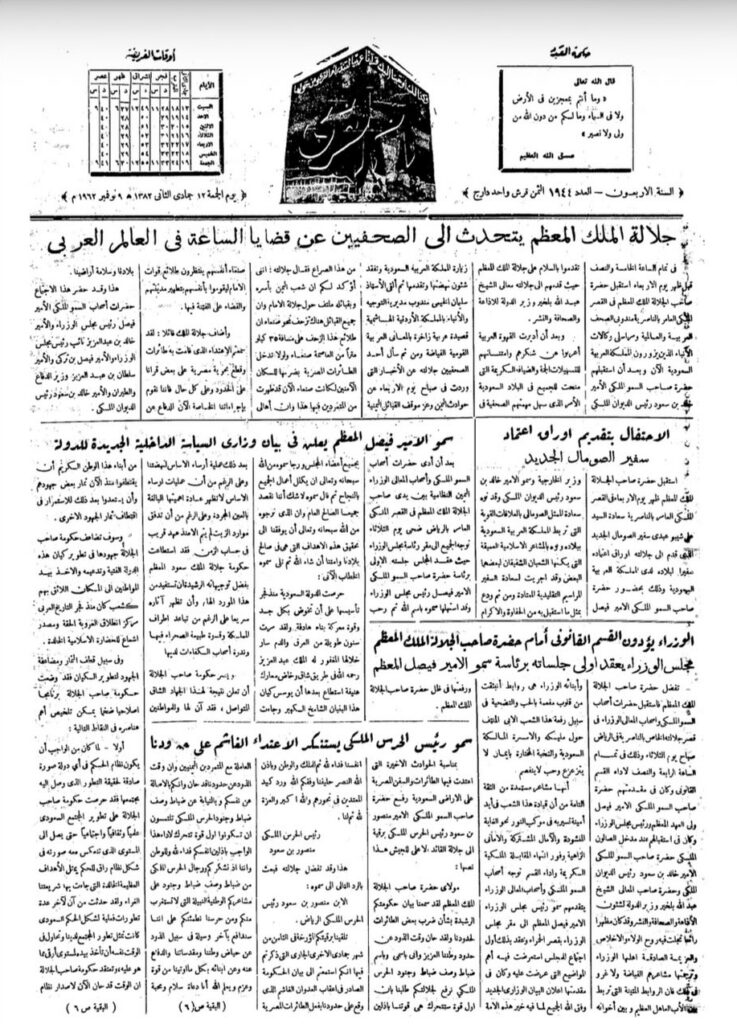
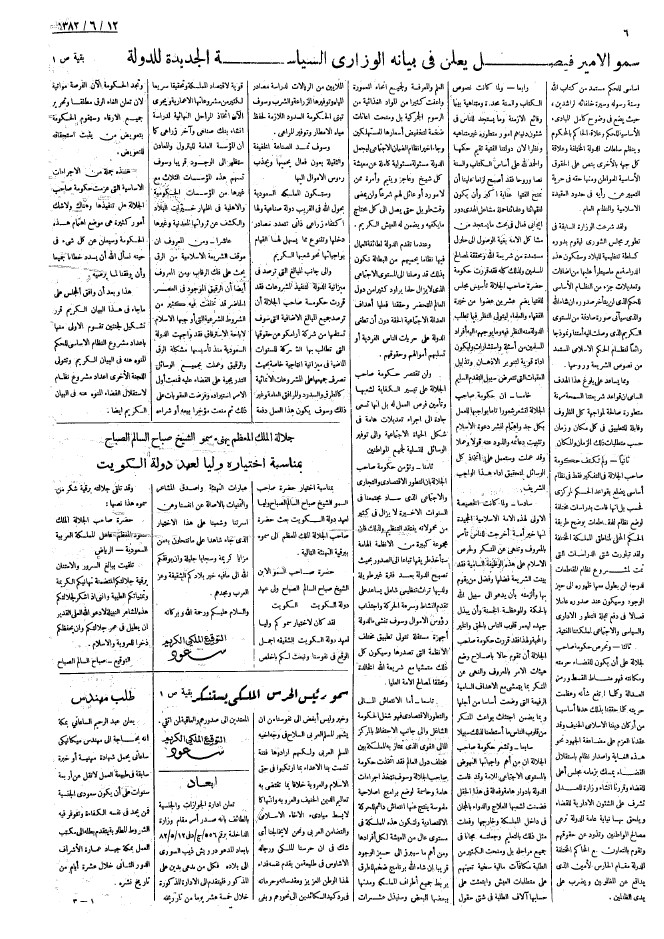
During this period, King Saud fell ill and traveled to the United States for treatment in 1382 AH (1962 CE), delegating his brother, Prince Faisal, to preside over the Council of Ministers. [6] At the first session of the Council convened after King Saud’s departure for medical treatment in America, the decree abolishing slavery was issued through expedited procedures, following a request from President Kennedy as part of a package of reforms known as the ‘Ten Points,’ presented in response to Prince Faisal’s request for American assistance in the Yemen War. Prince Faisal affirmed in this context that ‘these are among the measures which the Government of His Majesty the King wishes to implement.’ [7]
The decree also included provisions for financial compensation from the government to those who undertook the emancipation of enslaved persons, in order to encourage citizens to proceed with the matter promptly. [8] Subsequently, the Ministry of Labor and Social Affairs issued detailed instructions outlining the mechanisms of compensation for emancipation. A member of the Council is currently preparing these regulations for presentation to the Council, in execution of the decree abolishing slavery and prohibiting its practice.
These are among the fundamental measures which His Majesty’s Government has resolved to implement. There are, without doubt, many other matters that are of concern to this Government, and each will be announced in due course. We ask God to guide all our steps and to grant us success in that which pleases Him. [9]
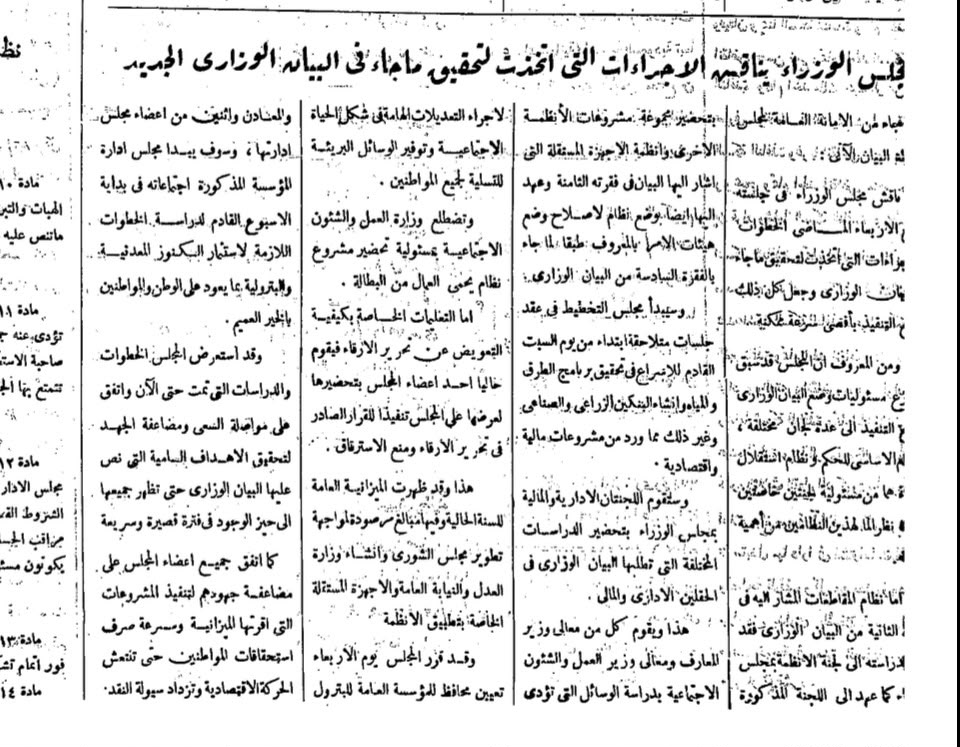
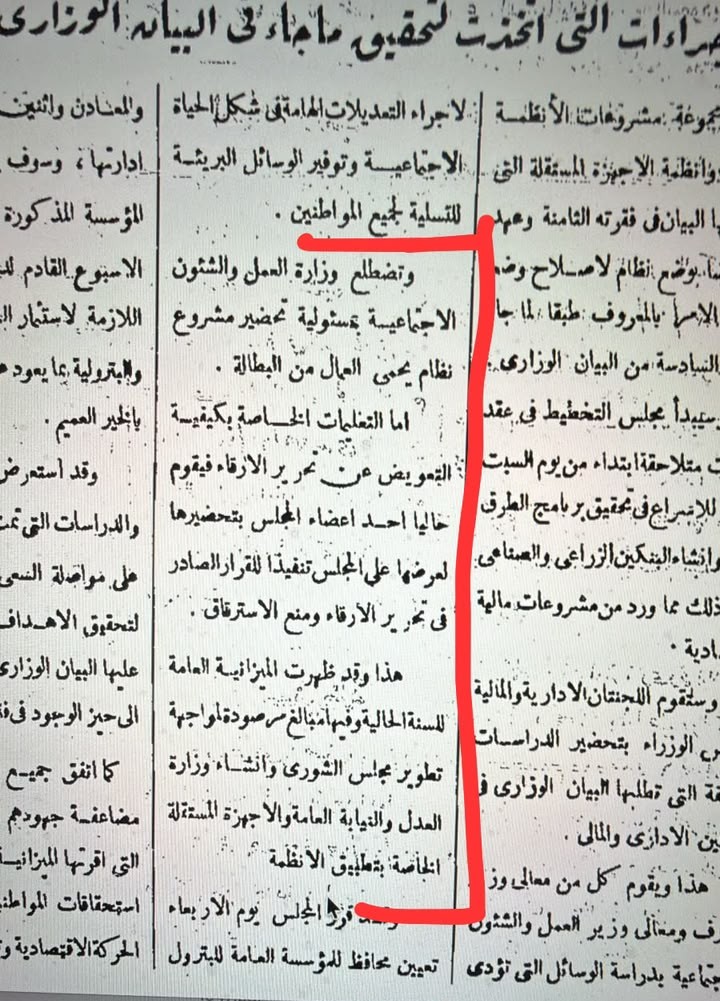
The Ministry of Labor and Social Affairs is entrusted with implementing the proposed system designed to protect workers from unemployment. As for the directives concerning the procedures for compensating individuals affected by the emancipation of enslaved persons, a member of the Council is currently preparing the necessary guidelines to be presented to the Council, in execution of the decree issued on the liberation of slaves and the prohibition of enslavement. The general budget for the current fiscal year has been released, allocating funds for the development of the Consultative Council (Majlis al‑Shura), the establishment of the Ministry of Justice and the Public Prosecution, and the independent bodies responsible for enforcing statutory regulations.


Footnotes:
- British Embassy, Jeddah, September 12, 1963, No. 50. Records of Saudi Arabia, British Foreign Office Documentation, 1963, p. 419.
- Umm Al‑Qura Newspaper, Issue No. 650, Year 13, p. 8 — Friday, 11 Rabi‘ al‑Awwal 1356 AH (21 May 1937).
-
Umm al‑Qura Newspaper, Issue No. 650, Year 13, p. 8 — Friday, 11 Rabi‘ al‑Awwal 1356 AH / 21 May 1937.
-
Scenes from the Life of King Abdulaziz, narrated by Prince Talal bin Abdulaziz, compiled by Kamal Al‑Kilani, 2nd edition, 1405 AH / 1985 CE, Al‑Nasiriyya Publications – Dar Al‑Kitab Al‑Arabi, Beirut, p. 109.
- Records of Saudi Arabia, British Foreign Office Documentation, 1963, p. 420.
- “Glimpses of Intellectual Development in the Arabian Peninsula in the Twentieth Century” by Fahd al‑Mubarak,
p. 62, regarding the decree “abolishing slavery during the reign of King Saud”. - Umm Al‑Qura Newspaper, Issue No. 1944, Year 40, p. 6 — Friday, 12 Jumada al‑Akhir 1382 AH (9 November 1962).
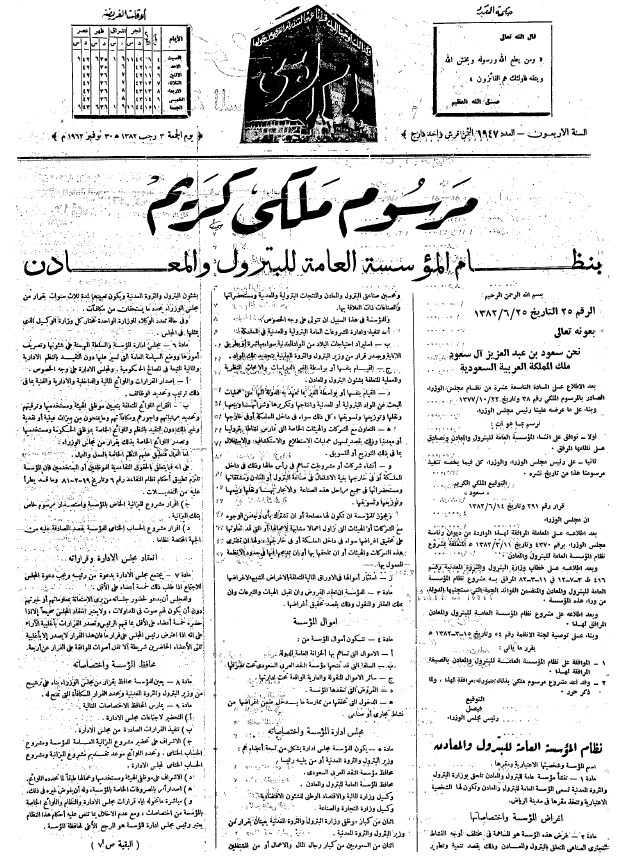
- Umm Al‑Qura Newspaper, Issue No. 1947, Year 40, p. 8 — Friday, 3 Rajab 1382 AH (30 November 1962).
-
Official Statement, Al‑Thaqafa Weekly Newspaper, Issue No. 55, p. 8 — dated 13 Jumada al‑Akhirah 1382 AH / 12 November 1962.