Encouraging studies, scholarships, and academic chairs in all universities of the Kingdom on the architecture of King Saud.
Her Royal Highness Princess Fahda bint Saud, Chair of the Center for Studies and Research at the King Saud Foundation, together with the Secretary‑General of the Foundation, Eng. Faisal Al‑Fadhl, presented a working paper titled “Saudi Architecture: King Saud’s Architectural Heritage — From Adobe to Concrete”. The paper was delivered within the main theme of the special session dedicated to the era of King Abdulaziz—may God bless his soul—at the Fifth Urban Heritage Forum, held in the presence of His Royal Highness Prince Sultan bin Salman, President of the Saudi Commission for Tourism and National Heritage, on 18 Safar 1437 AH. The region is hosting the forum this year, which focuses on the preservation, care, and investment of urban heritage across all fields.
In a special statement, Princess Fahda praised the tangible efforts of His Royal Highness Prince Sultan bin Salman, whose leadership of the Saudi Commission for Tourism and National Heritage has revived the nation’s historical memory, strengthened its great heritage, and provided continuous investment opportunities for future generations. She added that His Royal Highness Prince Dr. Faisal bin Mishaal bin Saud, Governor of Al‑Qassim Region, is a beacon of dedication in enhancing the region’s capabilities, particularly in advancing urban heritage as a driver of development and a guardian of national identity.
She further noted that it is a source of pride and honor for the Foundation to participate in the forum’s activities, to observe the distinguished role of the Emirate of Al‑Qassim in promoting the development of urban heritage sites and historical buildings, and to explore the promising investment opportunities, as well as to take part in the accompanying exhibition and workshops organized by the Saudi Commission for Tourism and National Heritage under the patronage of His Highness, with the attendance of experts, specialists, and students.
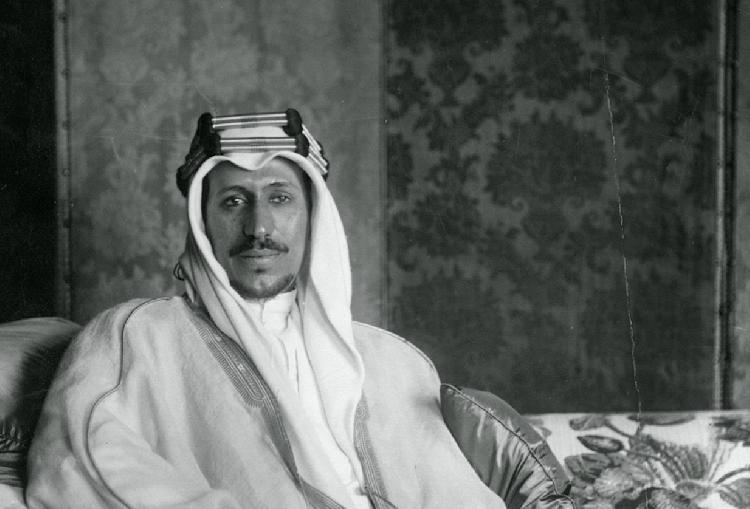
Eng. Faisal Al‑Fadhl, Secretary‑General of the King Saud Foundation, explained that the Center for Studies and Research has outlined ten strategies and recommendations to achieve the objectives presented in the working paper. These are based on the premise that Saudi architecture is rooted in the historical dimension of King Saud—the Pioneer of Architecture—who utilized the available capabilities and technologies of his time to shape a uniquely Saudi architectural identity. His vision moved the Kingdom beyond conventional architectural patterns toward a modern and evolving reality, embracing contemporary architecture for the benefit of national development.
Among the recommendations were:
- Establishing the King Saud National Museum in the capital, to be followed by affiliated museums across the Kingdom’s cities, under the supervision of the King Saud Foundation in cooperation with regional emirates and the Saudi Commission for Tourism and National Heritage.
- Accelerating the inclusion of contemporary buildings from the era of King Saud in national and international heritage registers to ensure their preservation.
- Naming prominent architectural and urban landmarks built during his reign after King Saud, such as the expansion gates of the Holy Mosque, the gates of Al‑Nasiriyah Palace and Khuzam Palace, major roads, the King Saud Cave landmark, and King Saud Gardens in Najran.
- Forming appropriate committees with regional governors, tourism authorities, and relevant entities to prevent the demolition of any building constructed during his reign, including the preservation of the Riyadh Municipality building.
- Developing mechanisms to document the attribution of architectural achievements to King Saud and prevent unjustified alterations.
- Encouraging studies, scholarships, and academic chairs in all Saudi universities dedicated to the architecture of King Saud.
- Creating a comprehensive database of buildings and architectural landmarks from his era, including descriptions, architectural drawings, historical and geographical information, and their connection to national events.
- Designing and producing a visual presentation for the King Saud International Exhibition in cooperation with the Ministry of Foreign Affairs, under the supervision of the King Saud Foundation.
The King Saud Foundation aims to preserve and promote the legacy of King Saud bin Abdulaziz Al Saud—may God bless his soul—for future generations, and to advance his cultural, social, and economic vision in alignment with the aspirations of the Kingdom of Saudi Arabia for the public good.
The Foundation was established as an endowment in the name of King Saud by his sons. It is a non‑governmental, non‑profit organization with independent legal and financial status. The King Saud Foundation was founded in 2015 under its basic charter, pursuant to an executed endowment deed issued by the Ministry of Justice and licensed by the Ministry of Commerce and Industry.